Mountain city, river city, hotpot city.
Chongqing is a city built on mountains, wrapped in fog, and powered by ambition. One of China's four direct-controlled municipalities, it sits at the confluence of the Yangtze and Jialing rivers. With over 30 million people, it is one of the largest urban areas on Earth, yet most visitors have never heard of it.
The city is a study in contrasts. Monorails thread through apartment buildings. Cable cars cross the river where ancient trade routes once ran. Street-side hotpot stalls share pavements with tech startups. For students, Chongqing offers something no other Chinese city can: the raw energy of a megacity that hasn't been polished for tourists.
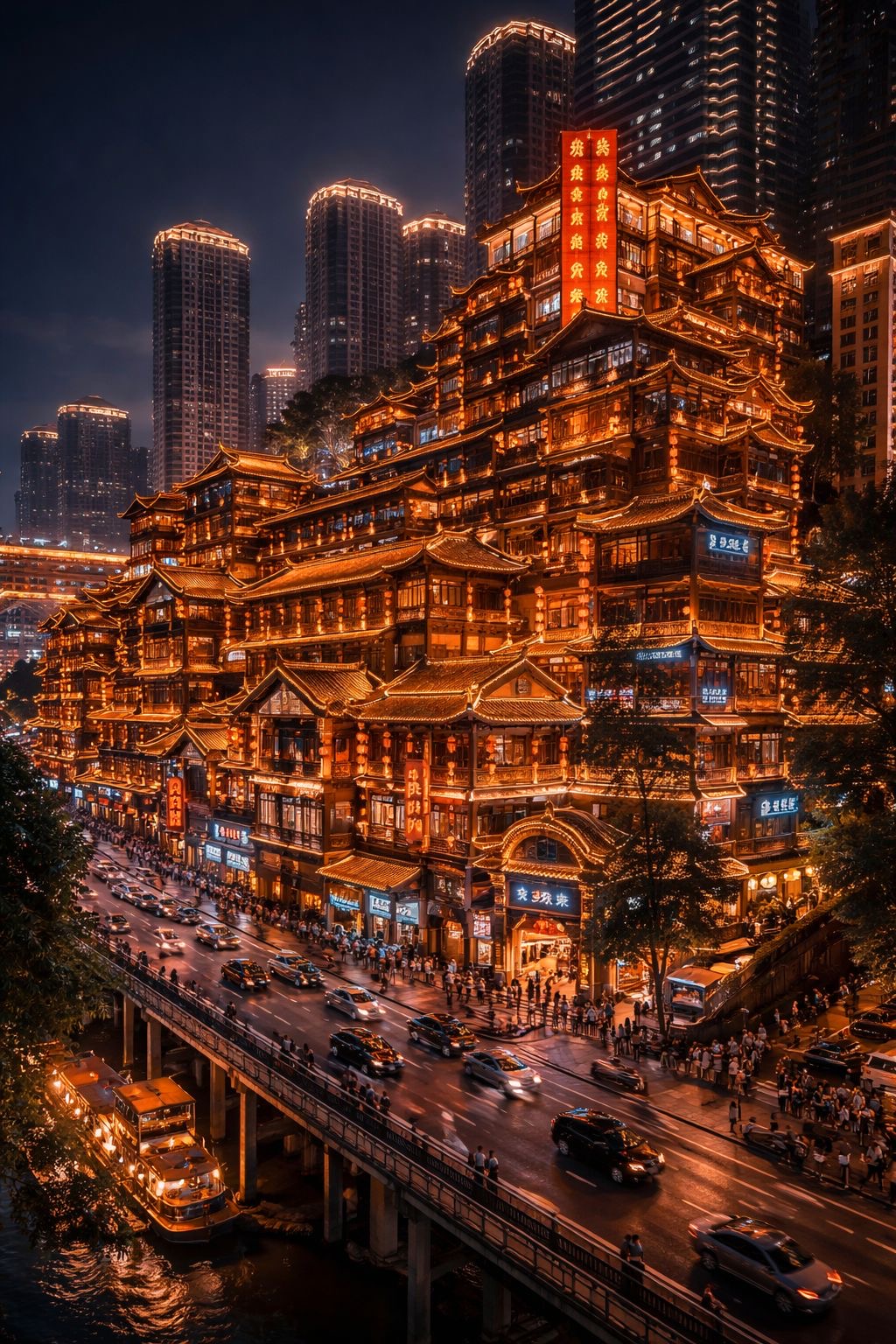
Eleven storeys of stilted architecture clinging to a riverside cliff, lit up at night like a scene from Spirited Away. The surrounding Jiefangbei district is Chongqing's commercial heart.
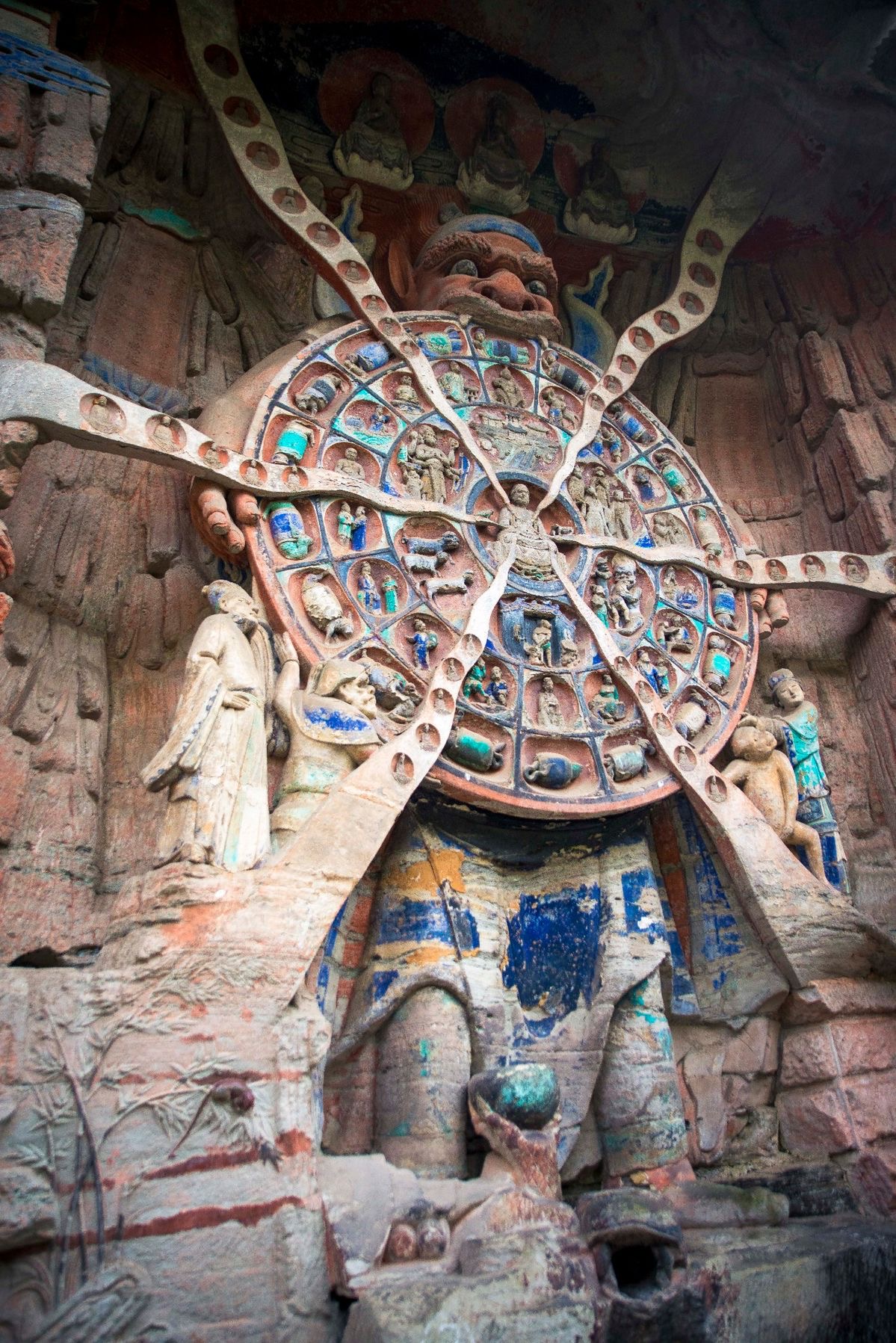
Over 50,000 Buddhist, Taoist, and Confucian sculptures carved between the 9th and 13th centuries. Remarkable for their scale, preservation, and the way three belief systems sit side by side on the same cliff face.
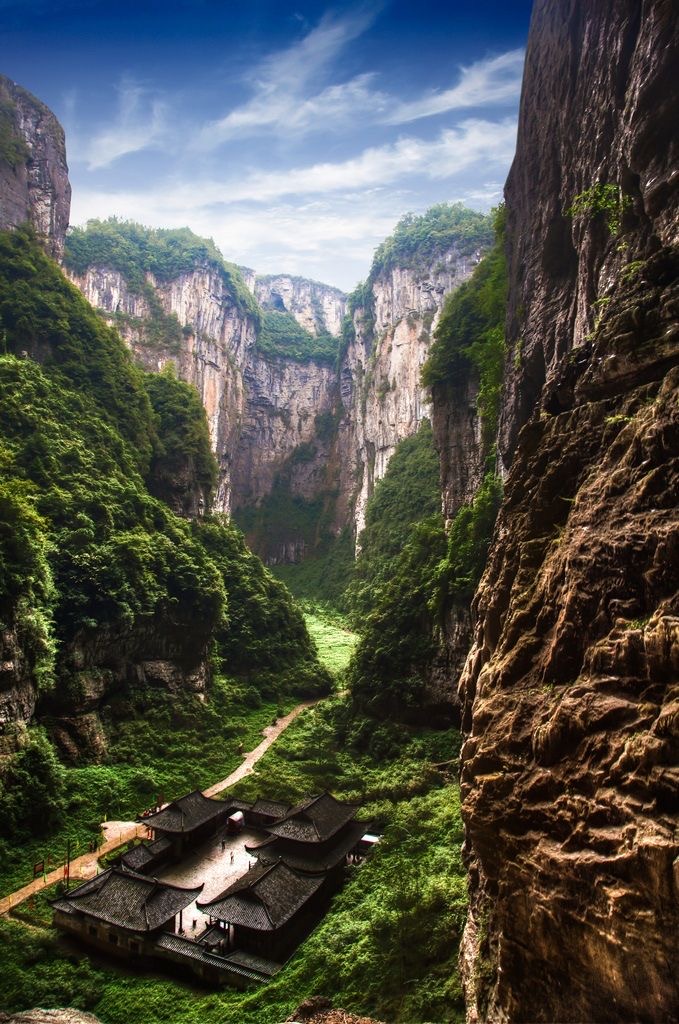
The Three Natural Bridges form the world's largest natural stone arch group. Below them, the Longshuixia Gorge drops into a deep-cut canyon of waterfalls and stalactites. This is the landscape that inspired the Transformers film locations.
March to May and September to November. Summers are extremely hot and humid. Chongqing is known as one of China's “furnace cities.”
The city's monorail and metro system is an experience in itself. Line 2 passes directly through a residential building at Liziba station.
Chongqing hotpot is fiercer than Sichuan's. Expect numbing Sichuan peppercorn, chilli oil, and offal alongside the usual meats and vegetables. Xiaomian noodles are the city's everyday breakfast.
Chongqing features in our Horizon Europe programme. Shanghai → Hangzhou → Shenzhen.